
Your conversion starting point
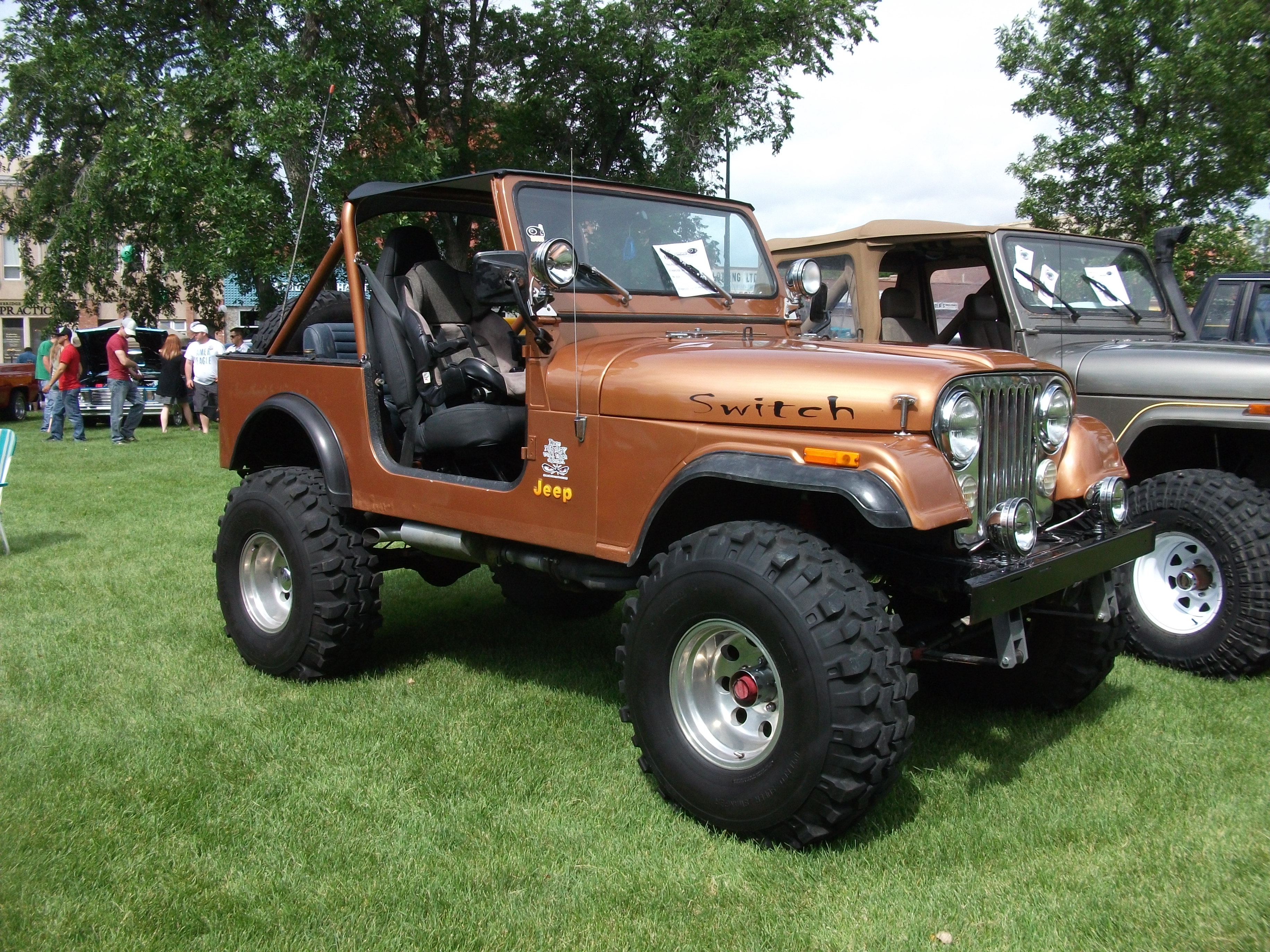
Jeep CJ
1955-1986 · Classic
An idea to investigate. No ownership or build commitment assumed.
What we can say so far
What to investigate first
Jeep CJs are popular EV conversion candidates due to their robust, simple chassis and ample space, often leveraging modern OEM components like Tesla motors and Chevy Volt batteries.
Model-level evidence: these sources may cover different years, variants, or build choices. They do not confirm suitability for this exact vehicle.
The robust, simple chassis of the Jeep CJ allows for aggressive gearing and high low-end torque, making it well-suited for off-road performance and capable of wheelies on acceleration.
Main constraints to investigate
Fitting battery packs, especially custom or reconfigured modules, requires extensive custom fabrication of enclosures and iterative design due to limited chassis space.
High continuous power generates extreme heat
General Classic guidanceAC compressor belt-driven from engine
General Classic guidanceRequires hydraulic pressure from engine
General Classic guidanceMake the tradeoffs more relevant
What would you want from a conversion?
Optional. Change a choice to see what it means for planning.
What your choices mean
Start with your actual journeys and charging access. Then investigate battery space, vehicle condition, and the skills you’ll need.
Authored planning guidance. These choices do not calculate range, cost, compatibility, or a feasibility score.Plan for safety
Battery protection, isolation, braking, mounting, and safe high-voltage procedures need competent design and verification. Check inspection and registration requirements for your location.
Improperly designed or fabricated motor, battery, or critical component mounts can lead to catastrophic failure, component detachment, and loss of vehicle control, especially given the CJ's body-on-frame design.
Inadequate or improperly integrated braking and steering systems pose an extreme safety risk, potentially leading to loss of stopping power or control.
Poor weight distribution, particularly with heavy battery packs, can severely compromise the CJ's handling, stability, and rollover risk.
Improperly grounded high-voltage components can pose a severe electrocution risk. Always ensure all high-voltage components are correctly grounded to the chassis and/or dedicated ground points according to manufacturer specifications.
Incorrect wiring in high-current circuits can lead to overheating, short circuits, and fire. Always verify wiring diagrams and connections, and use appropriately sized fuses/breakers before applying power.
Improper electrical isolation within battery modules can lead to dangerous short circuits, electrical shock, and fire hazards.
Inadequate securing of heavy battery modules poses a severe risk of detachment during impacts, becoming projectiles, and compromising vehicle structural integrity.
Poor battery placement can negatively impact the Jeep CJ's weight distribution, leading to unstable handling and increased rollover risk.
Welded steering components (e.g., intermediate shaft, steering box connections) are extremely dangerous and can lead to catastrophic failure of steering control. Immediate replacement with proper, articulating components is mandatory.
Improperly modified motor mounts can cause drivetrain misalignment, excessive vibration, and potential failure of mounts or connected components, posing a significant safety risk.
Source notes and this assessment cannot certify a design or replace training and qualified review.
Component market prices
Vendor prices are reference points, not a complete conversion quote.
More reading and source context
These accounts may cover different variants or years. Reported outcomes belong to those builds; they are not specifications for yours.
Jeep Scrambler EV Conversion - 1982 CJ-8
This article discusses the EV conversion of a 1982 Jeep CJ-8 Scrambler. The owner, Carter, found the vehicle as a barn find in Colorado. The conversion involved restoring the body, upgrading the suspension, and installing an Electric GT EV conversion system. This system more than doubles the original horsepower and torque. The article mentions a video walkthrough with Carter, detailing the restoration and improvements made to the vehicle during the EV conversion process. The project includes brand new paint, a fully rebuilt suspension, and the installation of an electric drivetrain.
1984 Jeep CJ-7 - Stock EV Conversion
Patrick's "Stock EVC" project documents the conversion of a 1984 Jeep CJ-7, with a core philosophy of replacing only the internal combustion engine and related components while meticulously retaining the original drivetrain from the bellhousing back. His modular design utilizes a Motor Cradle Assembly (MCA) for the NetGain Hyper9 AC-X144 motor and strategically places seven Tesla Model S/Y battery modules—four in a front box and three in the former gas tank location at the rear. The build process heavily leverages plywood for prototyping and fitment before converting designs to aluminum. Significant progress includes a successful motor spin test, a compact engine bay layout, and detailed planning for a reverse return cooling system and electrical wiring. This conversion is projected to result in a net weight reduction of approximately 300lbs. Although initially claiming to be the first Jeep EVC with regenerative braking, this was corrected by a fellow forum member. The thread also includes a valuable cross-reference to another Willys CJ3B EV conversion, highlighting the community's knowledge sharing.
Adoption of a modular design with Motor Cradle Assembly (MCA): This design choice allowed for efficient integration of the motor while retaining the stock drivetrain, streamlining the conversion process.