
Your conversion starting point
Toyota Pickup
1972-1995 · Classic
An idea to investigate. No ownership or build commitment assumed.
What we can say so far
What to investigate first
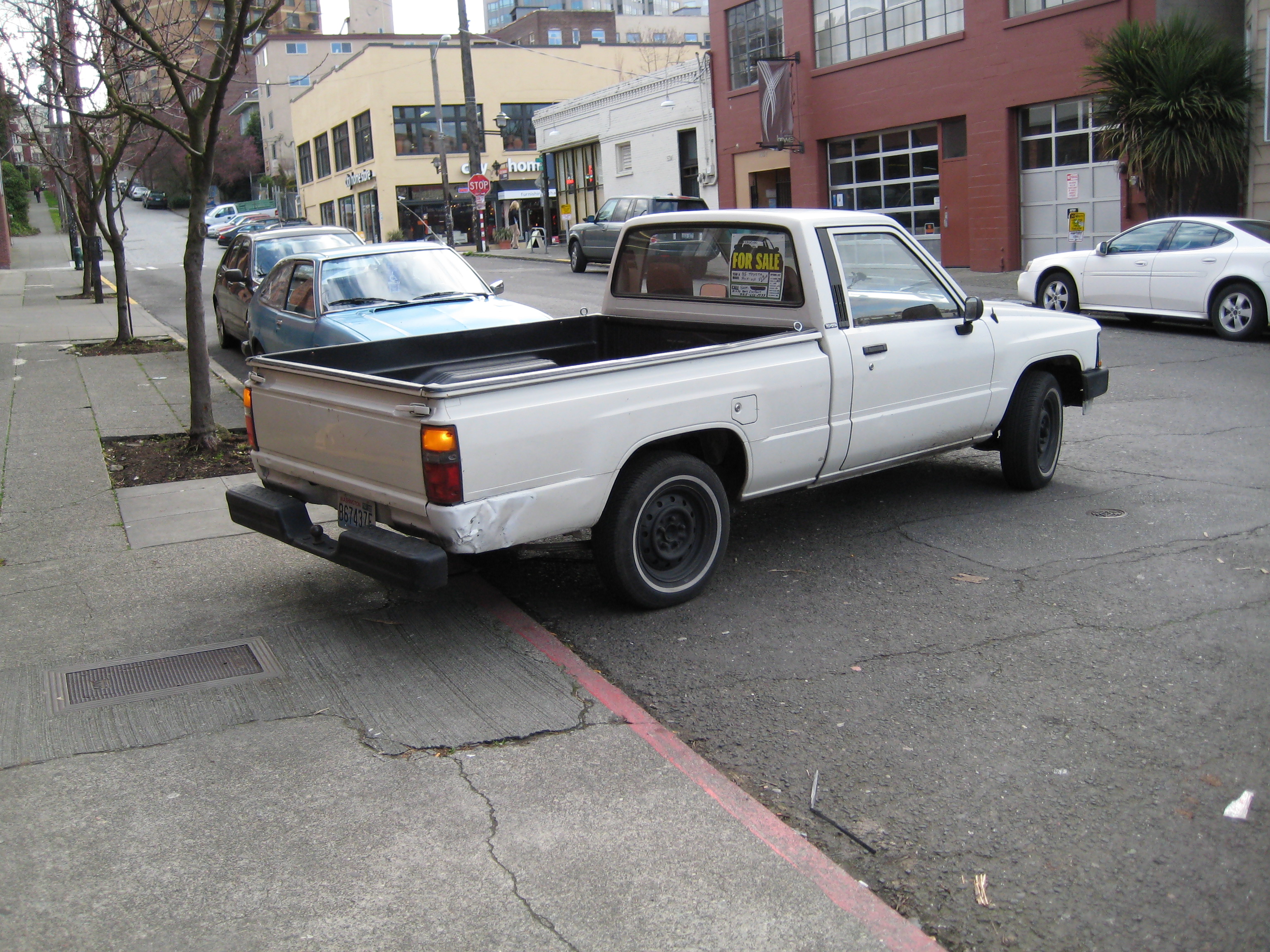
Toyota Pickups, particularly the 1980s models, are popular candidates for EV conversions due to their robust chassis and ample space for components.
Model-level evidence: these sources may cover different years, variants, or build choices. They do not confirm suitability for this exact vehicle.
The robust ladder frame chassis of the Toyota Pickup provides a solid foundation for mounting heavy battery packs and high-torque electric motors.
Main constraints to investigate
The removal of the original ICE necessitates the complete replacement or adaptation of engine-driven accessories, such as the hydraulic power steering pump and vacuum brake booster, with electric equivalents.
High continuous power generates extreme heat
General Classic guidanceAC compressor belt-driven from engine
General Classic guidanceRequires hydraulic pressure from engine
General Classic guidanceMake the tradeoffs more relevant
What would you want from a conversion?
Optional. Change a choice to see what it means for planning.
What your choices mean
Start with your actual journeys and charging access. Then investigate battery space, vehicle condition, and the skills you’ll need.
Authored planning guidance. These choices do not calculate range, cost, compatibility, or a feasibility score.Plan for safety
Battery protection, isolation, braking, mounting, and safe high-voltage procedures need competent design and verification. Check inspection and registration requirements for your location.
Improperly fabricated or secured drivetrain adapters can lead to catastrophic mechanical failure under load, potentially causing loss of control or injury.
Compromised steering components (e.g., leaks in the steering box) must be addressed immediately as they can lead to a sudden loss of steering assist or control.
Structural welds, especially for motor mounts or chassis accessories, must be performed with proper technique and heat management to avoid warping and ensure long-term structural integrity.
Improperly supported or unstable heavy components, such as battery packs, pose a severe crush hazard during installation. Always ensure loads are balanced and adequately secured.
Failure to firmly secure all components can lead to detachment during vehicle operation, posing a significant safety risk to occupants and others on the road, especially given the vibrations inherent to a Pickup chassis.
High-Force Operations: Using presses, impact drivers, and custom pullers can cause severe injury if components fail or slip; always ensure proper setup and use appropriate PPE.
Thermal Applications: Heating components with torches or ovens can cause burns and alter material properties if not controlled; use heat-resistant gloves and monitor temperatures.
Custom Fabrication: Welding, grinding, and cutting operations require proper ventilation, eye protection, and fire safety measures to prevent injury and hazards.
Unsecured or improperly routed High Voltage (HV) cables pose a severe risk of electrocution, short circuits, and fire, especially given the potential for vibration and chassis movement in a Toyota Pickup.
Incorrectly wired Battery Management System (BMS) harnesses can lead to catastrophic battery failure, thermal runaway, or complete system shutdown, endangering the vehicle and occupants.
Incorrect polarity during battery or BMS wiring can lead to immediate and severe damage to BMS boards and other HV components, posing a significant risk of fire or electrocution.
Failure to properly waterproof external HV connectors or secure hand-disassemblable HV components increases the risk of short circuits, electrocution, and component failure, especially in a Pickup's varied operating environment.
Inadequate chassis grounding for HV components can compromise safety by preventing proper fault current discharge and increasing electromagnetic interference (EMI), potentially leading to system malfunctions and unsafe conditions.
Improperly sized battery packs can lead to dangerous voltage sag, potentially damaging components, causing unexpected power loss, or leaving the vehicle stranded in unsafe locations, especially when carrying loads or driving uphill.
Failure to properly seal, vent, and insulate battery enclosures according to ECE R100 can result in severe hazards including thermal runaway, fire, explosion from gas buildup, or electrical shock.
Self-made battery boxes, while common for fitting the Toyota Pickup's chassis, must meet stringent ECE R100 (or equivalent) safety standards to prevent critical hazards like thermal runaway, short circuits, and impact damage. Failure to properly design and certify these enclosures is a severe safety risk.
Source notes and this assessment cannot certify a design or replace training and qualified review.
Component market prices
Vendor prices are reference points, not a complete conversion quote.
More reading and source context
These accounts may cover different variants or years. Reported outcomes belong to those builds; they are not specifications for yours.
A 1987 Toyota Pickup Gets a Second Life, Courtesy of Jeremy at Electric Supercar
This article details the comprehensive EV conversion of a 1987 Toyota Pickup, undertaken by Jeremy and his team at Electric Supercar. The owner, a long-time enthusiast of small trucks, opted for electrification to preserve the classic's character while eliminating maintenance burdens and enhancing performance. The build centers around a Tesla Model 3 Performance rear drive unit, ingeniously mounted transversely to achieve genuine all-wheel drive, with a custom gear reduction from 9:1 to 4:1 and a Quaife limited-slip differential for off-road capability. Power is supplied by a custom 43 kWh battery pack, split between the engine bay and under the truck bed for balanced weight distribution. A key challenge involved redesigning motor mounts to improve ground clearance for off-road use. The conversion boasts impressive performance, achieving 0-60 mph in approximately 5 seconds and offering around 100 miles of real-world range on aggressive off-road tires. The project, completed in just over a year, involved significant custom fabrication, demonstrating a successful blend of classic aesthetics with modern electric performance and utility.
1984 Toyota Pickup - almost done | DIY Electric Car Forums
The thread discusses the final stages of an EV conversion project, focusing on readiness for inspection. Work completed includes mounting rear fenders, finishing battery box hinges and latches, and resolving a turn signal issue. The project's Evalbum page provides further specifications, and the next steps involve bodywork, paint, and stainless steel trim. The build uses ammo boxes for a creative battery enclosure solution.